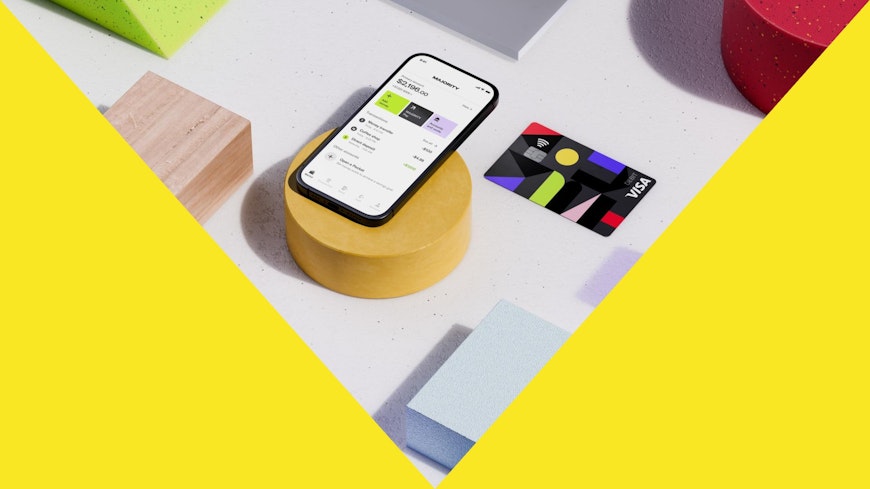
The cheapest Colombia transfer pairs a low or zero per-transfer fee with a tight exchange-rate margin and a delivery method your recipient can actually use. You can start the same transfer in the app or on WhatsApp.
Quick answer
The cheapest Colombia transfer is rarely the one with the smallest sticker fee. The total cost has three parts: the per-transfer fee charged by the provider, the exchange-rate margin baked into the USD-to-COP conversion, and any pickup or correspondent-bank fee on the receiving side. To find the lowest-cost option, compare those three together for the exact amount and delivery method you plan to use, on the day you plan to send.
What you need to know
- The advertised "fee" is only one piece of the cost. The exchange-rate margin (the gap between the mid-market rate and the rate the provider gives you) often costs more than the headline fee.
- Total cost depends on the delivery method. Bank transfers to a Colombian bank, mobile wallet deposits to Nequi or Daviplata, and cash pickup at Efecty or Éxito each have different fee structures and exchange-rate handling, even at the same provider.
- Promo rates for new members can hide the long-run cost. A first-transfer special rate is not the rate you will get on every later transfer.
- Speed and cost trade off. Same-day cash pickup is usually priced higher than a 1-to-3-day bank transfer to a major Colombian bank.
- Membership-based providers and pay-per-transfer providers are not the same comparison. A monthly fee can pay for itself if you transfer regularly and large amounts; it usually does not if you transfer once or twice a year.
What "cheapest" actually means for a Colombia transfer
Colombia is one of the largest Latin American money-transfer routes from the US, and most major US-to-international transfer providers support it. The variety is good for choice, but it makes "cheapest" hard to pin down because providers price the same transfer in different ways.
The total cost of a Colombia transfer breaks down into three components:
- Per-transfer fee. A flat dollar amount or a percentage charged by the provider when you confirm the transfer. Some providers waive this for the first transfer or above a threshold amount; some charge by delivery method (bank, wallet, or cash pickup).
- Exchange-rate margin. The difference between the mid-market USD-to-COP rate (the rate banks trade at, visible on financial data sites) and the rate the provider applies to your transfer. A 1% margin on a $500 transfer is $5; a 3% margin is $15. In a transfers like Colombia where the peso moves daily, this number matters as much as the fee.
- Receive-side cost. A correspondent-bank fee that the recipient's Colombian bank may deduct, or, for cash pickup, a partner network's commission. This is usually small or zero on most Colombia routes but worth checking.
A transfer with a $0 sticker fee and a 3% exchange-rate margin can cost more than one with a $4 fee and a 0.5% margin. Total cost is the only number that matters when you compare options.
Five things to compare when looking for the cheapest Colombia transfer
Use these five criteria to evaluate any Colombia transfer option on price, regardless of provider.
- The total amount of COP your recipient receives for the USD amount you are sending today. This is the headline number; everything else feeds into it.
- The exchange rate the provider quotes, compared to the current mid-market USD-to-COP rate. The difference is your exchange-rate margin.
- The per-transfer fee for the specific delivery method (bank deposit, cash pickup, or mobile wallet such as Nequi or Daviplata) you will use most often.
- Any fixed monthly or membership cost, if the provider charges one. Divide it across the number of transfers you expect to make in a month to see the per-transfer share.
- Whether the price you see today is the price you keep. Look for promo language ("first transfer", "limited-time rate", "new members only") and compare to the standard rate.
A simple way to run the comparison is to enter the same USD amount on each provider's calculator at the same time of day, write down the COP figure each one quotes, and pick the highest COP total. That figure already includes the fee and the exchange-rate margin. Add any monthly cost on top, divided by your typical monthly transfer count, to get an apples-to-apples per-transfer cost.
Colombia transfer methods compared on cost, speed, and convenience
The same provider can offer multiple delivery methods to Colombia, each with different cost and convenience trade-offs. The table below summarizes the three most common methods Colombian recipients use.
WhatsApp is a way to start the transfer, not a separate delivery method. The payout options below work the same whether you begin in the app or in a WhatsApp chat.
| Delivery method | What your recipient needs | Typical speed | Cost characteristics |
|---|---|---|---|
| Bank transfer to a Colombian bank | An account at Bancolombia, Davivienda, Banco de Bogotá, BBVA Colombia, Banco AV Villas, Banco Popular, Banco Occidente, or another supported institution | 30 minutes to 5 business days, depending on the receiving bank | Usually the lowest-cost option per transfer, since transfers are direct bank-to-bank and there is no cash-handling commission |
| Mobile wallet deposit | A Colombian mobile wallet account at a supported provider, including Nequi, Daviplata, or Movii | Minutes to hours, where available | Cost is typically close to bank transfer; very convenient because Nequi and Daviplata are widely used across Colombia |
| Cash pickup at a partner location | A government-issued ID at a participating partner location, including Efecty, Éxito, Banco W, and cash-pickup desks at BBVA Colombia, Bancolombia, and Davivienda | Same day at most participating locations | Often slightly higher cost because of the partner-network commission, but no recipient bank account or wallet needed |
The cheapest method on paper is usually a bank transfer to a major Colombian bank, because there is no cash-handling step. The cheapest method in practice is the one your recipient can actually receive without losing time or paying fees on their side. For a recipient who already has Nequi or Daviplata on their phone, mobile wallet is often the most convenient and the cost is close to bank transfer. For a recipient without a bank account who lives near an Efecty branch, cash pickup can come out cheaper overall once you count the time and cost of opening an account.
How fee-free transfers work, and the catch to watch for
Several providers charge no per-transfer fee on Colombia transfers. The catch is how they make money instead, and it is worth reading carefully.
There are two common cost models:
- Pay-per-transfer with a per-transfer fee. You pay a fixed dollar amount or a percentage on each send. The exchange-rate margin is usually tighter, since the provider takes its margin in the fee.
- Membership or subscription with no per-transfer fee. You pay a fixed monthly amount (for example, $6.99 per month with the MAJORITY membership) and send transfers in supported countries without an additional per-transfer fee. The exchange rate is set by the provider and shown in the app before you confirm, and the membership cost is fixed regardless of how much you send that month.
Whichever model is cheaper for you depends on volume. If you send $500 to Colombia once a month, a $6.99 monthly fee is the equivalent of a $6.99 per-transfer fee, plus whatever exchange-rate margin applies. If you send $200 four times a month, the same $6.99 spreads to about $1.75 per transfer. If you send once a year, a pay-per-transfer provider with a low single-transfer fee is usually less expensive than a monthly membership.
The exchange-rate margin is the variable that hides the most cost in either model. Always check the live USD-to-COP rate the provider is quoting against the mid-market rate before confirming a transfer.
What to do next
- Decide on the delivery method your recipient prefers (bank deposit at a specific Colombian bank, mobile wallet like Nequi or Daviplata, or cash pickup at a specific store).
- Open the calculator on 2 or 3 transfer providers at the same time of day, enter the same USD amount, and write down the COP total each one quotes.
- Note any promo wording on the rate and check the standard, non-promotional rate.
- Add any monthly cost, divided by your typical monthly transfer count, to get the true per-transfer cost.
- Pick the option that delivers the highest COP total your recipient will receive after all costs are accounted for.
Related MAJORITY resources
MAJORITY is a financial membership for migrants in the US. On the Colombia transfers, MAJORITY supports bank transfers to Bancolombia, Davivienda, Banco de Bogotá, BBVA Colombia, and other Colombian banks, mobile wallet sends to Nequi, Daviplata, and Movii, and cash pickup at Efecty, Éxito, and other partner locations. At the member tier there is no per-transfer fee, regardless of delivery method, and the live exchange rate and estimated delivery time are visible in the app before each transfer is confirmed.
For other angles on the Colombia transfers, see these related articles:
- Transfers to Colombia: step-by-step guide to sending a Colombian bank transfer, including how to enter Bancolombia and other recipient details.
- Why is it a good time to send money to Colombia?: timing and exchange-rate context for the USD-to-COP transfers.
- Exchange rates in transfers to Colombia: plain-language explainer on how USD-to-COP rates work and what the spread means for your transfer.
- Why more Colombians are choosing digital platforms for money transfers: industry framing on the shift from cash-based to app-based transfers to Colombia.
Or get started directly:
What sending to Colombia on WhatsApp costs
Starting your Colombia transfer on WhatsApp costs the same as starting it in the app, and which path is cheaper depends on how often you send. With a MAJORITY membership, you send with a $0 MAJORITY transfer fee. Sending on WhatsApp without a membership is $1.99 per transfer. MAJORITY earns money on the foreign exchange rate on all transfers.
Either way you see our competitive exchange rate and any fee before you confirm, so you know how many pesos land before the money moves. Compare the all-in number rather than the fee alone: a transfer advertised with no fee can still cost more through a wider rate.
Read the full breakdown in what it really costs to send money on WhatsApp, or check today's Colombia rate on the product page.
Frequently asked questions
What is the cheapest way to send money to Colombia from the US?
The cheapest way is the option that delivers the largest amount of COP to your recipient for the USD amount you are sending today, after the per-transfer fee, the exchange-rate margin, and any receive-side cost are all included. Run the same USD amount through 2 or 3 provider calculators at the same time of day and compare the COP totals.
Are no-fee money transfers to Colombia actually cheaper?
Not always. A $0 per-transfer fee can be paired with a wider exchange-rate margin, in which case the provider is making its money on the rate instead of the fee. Always compare the COP amount your recipient receives, since that single number already accounts for the fee and the rate together.
Is bank transfer, mobile wallet, or cash pickup cheapest for sending money to Colombia?
Bank transfer to a major Colombian bank such as Bancolombia or Davivienda is usually the lowest-cost method per transfer, because there is no cash-handling commission. Mobile wallet to Nequi or Daviplata is typically close to bank transfer on cost and is often the most convenient. Cash pickup at Efecty or Éxito is convenient if your recipient does not have a bank account or mobile wallet, but typically costs slightly more.
How do I avoid high fees when sending money to Colombia?
Compare the total cost (per-transfer fee plus exchange-rate margin) across providers, not just the headline fee. Avoid providers that quote a "promo rate" without showing the standard rate. If you send to Colombia regularly, check whether a monthly-membership provider works out cheaper than pay-per-transfer at your monthly volume.
Does a monthly-membership provider charge a fee on each Colombia transfer?
It depends on the provider, so check before signing up. With the MAJORITY membership, no per-transfer fee applies to Colombia transfers at the member tier; the membership is $6.99 per month and includes Colombia transfers via bank transfer, mobile wallet, and cash pickup. The exchange rate at the time of the transfer applies, and the rate plus estimated delivery time are visible in the app before each transfer is confirmed.
How long does a money transfer to Colombia take?
It depends on the delivery method. Bank transfers to a Colombian bank typically take 30 minutes to 5 business days depending on the receiving institution. Mobile wallet deposits to Nequi, Daviplata, or Movii are typically available within minutes to hours. Cash pickup at a partner network such as Efecty or Éxito is usually available the same day.
Is it cheaper to send money to Colombia on WhatsApp?
It costs the same as sending in the app. With a MAJORITY membership you send with a $0 MAJORITY transfer fee; sending on WhatsApp without a membership is $1.99 per transfer. Compare the amount your recipient receives, not just the fee.
Disclosures
The MAJORITY app facilitates banking services through Axiom Bank, N.A. ("Axiom"), Member FDIC. The funds deposited in the account held at Axiom, Member FDIC, are FDIC-insured on a pass-through basis up to $250,000 per depositor in the event Axiom fails and subject to the satisfaction of certain conditions. Non-deposit products or services such as money transfers and telecom services are not FDIC-insured.
MAJORITY Visa® Debit Card is issued by Axiom Bank, N.A., Member FDIC, pursuant to a license from Visa U.S.A. Inc.