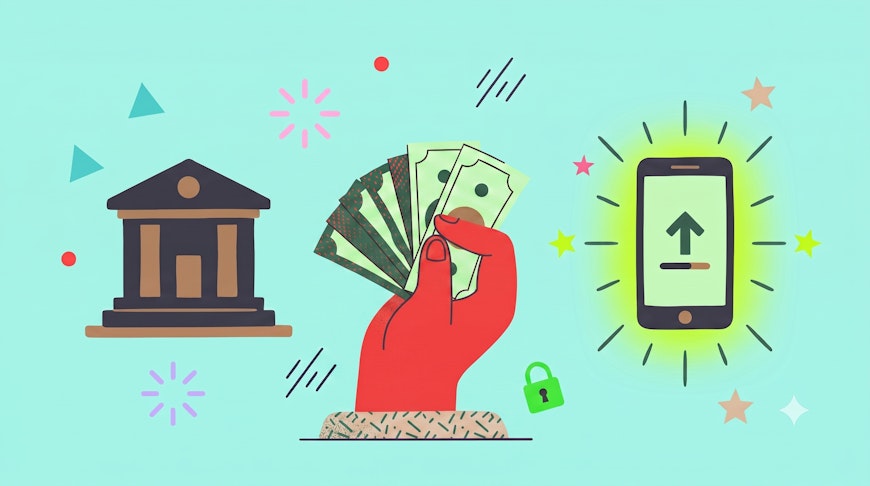
Choose bank transfer for recipients with a bank account, cash pickup for those without one, and mobile wallet for fast everyday transfers.
Quick answer
The three main international money transfer methods exist for different recipients and different situations. Bank transfer sends funds directly to the recipient's local bank account, which is best when they bank regularly and want the money posted to their existing account. Cash pickup lets the recipient collect physical cash at a retail location, which is best when they do not have a bank account or need cash in hand. Mobile wallet credits the recipient's wallet app like Nequi or GCash, which is best for fast everyday transfers between people who already use the wallet.
What you need to know
- The right method depends on the recipient, not the sender. Ask what they actually want to do with the money before you pick.
- Bank transfer is usually the most economical channel because the transfers are electronic and the operating cost is lowest.
- Cash pickup is the only option for recipients who do not have a bank account or a mobile wallet. It is also useful when the money needs to cover an immediate cash expense.
- Mobile wallet has become the default in several countries, including Colombia (Nequi, Daviplata), Philippines (GCash), Peru (Yape), and Mexico (Mercado Pago), because the recipient sees the balance typically within minutes.
- Some countries have a national instant-payment network. Brazil's Pix is the most prominent example, with 24/7 delivery to most Brazilian banks and wallets in seconds.
- Speed, cost, and convenience trade off differently across the three methods. Pick the one whose trade-offs match your situation, not the one that has the most marketing.
How to choose: 4 questions to ask
Picking the right delivery method is a short conversation with your recipient, not a guess. Work through these four questions before you start the transfer.
- Does your recipient have a bank account they actively use? If yes, bank transfer is usually the cleanest option. The money lands in the account they already use for bills, payroll, and savings, with no extra step.
- Do they prefer cash for daily expenses? In many countries, smaller everyday transactions still run on cash. If your recipient pays rent, market sellers, or transport in cash, picking up the money in cash at a nearby retailer can be more practical than depositing it to a bank and then withdrawing it.
- Do they already use a mobile wallet? Wallets like Nequi or Daviplata in Colombia, GCash in the Philippines, and Mercado Pago in Mexico are now primary money apps for millions of recipients. If your recipient already pays merchants from a wallet, sending directly to that wallet usually delivers the money fastest and removes the trip to a bank or pickup point.
- How quickly does the recipient need the money? Mobile wallet and instant local payment networks settle in minutes. Cash pickup is typically same-day once the transfer is released. Bank transfer ranges from 30 minutes to 5 business days depending on the destination country, the recipient bank, and the time of day.
If you do not know the answers, ask. A 2-minute message saves a returned transfer or a wasted trip to a pickup location.
Comparison: bank transfer vs cash pickup vs mobile wallet
The table below compares the three main delivery methods on the trade-offs that actually matter when you are choosing one. Speed numbers are typical ranges with an app-based money transfer provider, not promises for every transfer.
| Delivery method | Best for | Convenience for recipient | Typical speed | Common examples |
|---|---|---|---|---|
| Bank transfer | Recipients who bank regularly and want the money in their existing account | High if they already use online or mobile banking; lower if they have to visit a branch | 30 minutes to 5 business days | BBVA Bancomer or Banorte in Mexico; Bancolombia or Davivienda in Colombia; bolívar accounts in Venezuela (most under 1 hour) |
| Cash pickup | Recipients without a bank account; people who need cash in hand for immediate expenses | High where pickup partners are nearby; low in rural areas with limited locations | Same day at participating locations | OXXO, Elektra, Coppel, Walmart, or 7-Eleven in Mexico; Efecty or Éxito in Colombia |
| Mobile wallet | Recipients who already use a wallet app for daily payments | Highest in countries where wallets are widespread; balance appears in the recipient's app | Minutes to a few hours | Nequi, Daviplata, or Movii in Colombia; GCash in the Philippines; Mercado Pago in Mexico; Yape or Plin in Peru |
| Instant local payment (where supported) | Recipients in countries with a national instant-payment network | Highest; settles 24/7 to most local banks and wallets | Minutes | Pix in Brazil (24/7 to most Brazilian banks and digital wallets) |
A few countries deserve a separate note. Brazil's Pix runs 24/7 and settles in seconds, so for a Brazilian recipient the instant payment option is almost always the right choice. Venezuela bolívar bank transfers typically complete within the hour, though timing can vary, so the standard bank-transfer speed range understates how fast transfers to that country move. In the Philippines, GCash adoption is high enough that mobile wallet is often the recipient's preferred channel even if they also have a bank account.
When bank transfer is the right call
Bank transfer is the default for recipients who already use a local bank for payroll, savings, or recurring bills. The money posts to the account they already log in to, so there is no extra step for them and no risk of a missed pickup. In countries like Mexico, the bank-partner network is broad enough that most recipients can pick a bank they already use, including BBVA Bancomer, Banorte, Santander, Banco Azteca, HSBC, Scotiabank, Nu México, or Inbursa.
Bank transfer is also typically the most economical channel. Bank deposit runs on electronic networks, the recipient banks rarely deduct an incoming fee on local-currency transfers handled by a specialist provider, and the exchange rate margin tends to be the same or tighter than on cash pickup because the operating cost is lower.
The trade-off is timing. Bank transfer is the slowest of the three methods on its slow end, with a typical range of 30 minutes to 5 business days. The actual time depends on the destination country, the recipient bank's posting schedule, the time of day, and any weekend or public holiday in either country. If your recipient needs the money the same day, bank transfer can still work for many countries, but you should check the in-app estimate before confirming.
When cash pickup is the right call
Cash pickup is the right method for two situations. The first is when the recipient does not have a bank account. The second is when they have a bank account but need cash in hand for immediate expenses such as rent, food, or transport in a cash-heavy local economy.
In Mexico, the pickup network is dense and covers everyday locations: OXXO, Elektra, Coppel, Walmart, Bodega Aurrerá, Soriana, 7-Eleven, Farmacias del Ahorro, Farmacias Guadalajara, and Telecomm, among others. A recipient can usually find a participating location within a short walk in most urban and suburban areas. For the step-by-step, see how cash pickup to Mexico works with MAJORITY. In Colombia, Efecty and Éxito anchor a similarly broad cash-pickup network, alongside select pickup points at Bancolombia, BBVA Colombia, Davivienda, and Banco W. In Peru, Interbank and Argenper handle cash pickup in soles or US dollars.
Cash pickup is typically same-day at participating locations once the transfer is released. The trade-off is that the recipient has to travel to the pickup point during business hours with the right ID, and there are daily cash withdrawal limits at most locations. Sending to Nicaragua or Honduras? See how cash pickup in Nicaragua and cash pickup in Honduras work, step by step.
When mobile wallet is the right call
Mobile wallet is the right method when the recipient already uses a wallet app as their day-to-day money app. In several major countries, mobile wallets have moved from a niche product to the primary way people pay for things, receive money from friends and family, and store small balances.
Mobile wallet examples by country:
- Colombia. Nequi, Daviplata, and Movii. Nequi and Daviplata are operated by Bancolombia and Davivienda respectively and are widely used for everyday payments, including merchant QR codes and peer-to-peer transfers.
- Philippines. GCash is the dominant mobile wallet for everyday payments, top-ups, and peer-to-peer transfers.
- Mexico. Mercado Pago is the most common mobile wallet partner for cross-border transfers and is integrated with the wider Mercado Libre ecosystem.
- Peru. Yape and Plin are the two most popular digital wallets, both linked to local bank accounts and used for everyday transfers and payments.
Mobile wallet typically delivers within minutes and at most a few hours. The recipient sees the balance in their wallet app as soon as it posts, and the money is immediately usable for payments, transfers, or withdrawal to a linked bank account. The trade-off is that the recipient has to already have the wallet installed and activated, and not every country has a strong wallet ecosystem.
A note on instant local payment networks
Some countries operate a national instant-payment network that settles in seconds to most local banks and wallets. Brazil's Pix is the largest and best-known example: it is operated by the Central Bank of Brazil, runs 24/7 including weekends and holidays, and uses a "Pix key" (such as a phone number, email, or national ID) instead of full account details. With Pix, an international transfer from the US becomes a local Pix payment for the recipient, and the local leg arrives in seconds regardless of the time of day once the cross-border step completes.
Where an instant local payment network is available, it is typically the fastest and most flexible option, because it covers both bank accounts and mobile wallets and runs on a schedule that does not depend on banking hours.
What to do next
- Ask your recipient which option works best for them. The right answer depends on whether they have a bank account, whether they use a mobile wallet, and how quickly they need the money.
- Open your provider's app and check which methods are available for the destination country. Not every country supports all three methods.
- Look at the estimated delivery time shown before you confirm. The in-app estimate is the most accurate timeline for your specific transfer because it accounts for the country, partner, and time of day.
- For your first transfer with a new recipient, consider sending a small test amount to confirm the details work. The next transfer can then run at the full amount with confidence.
Related MAJORITY resources
MAJORITY is one transparent-fee option among several providers. The two articles below cover the related cost and timing questions in the same depth, so you can compare delivery methods with a clear picture of what each one will cost and how long it will take.
- How much does it cost to send money internationally?
- How long does an international money transfer take?
How MAJORITY can help
MAJORITY is a financial membership for migrants in the US that offers international money transfers to 35+ countries with bank transfer, cash pickup, mobile wallet, and instant local payment options where the country supports them. The available methods, partners, and estimated delivery time for your specific transfer are shown in the app before you confirm.
Frequently asked questions
Which money transfer method is best?
There is no single best method. The right one depends on your recipient. Bank transfer is usually best for recipients who actively use a local bank account, cash pickup for recipients without a bank account or who need cash in hand, and mobile wallet for recipients who already use a wallet app for daily payments. In countries with an instant local payment network like Brazil's Pix, instant delivery is often the fastest and most flexible choice.
Should I send money to a bank account or for cash pickup?
Send to a bank account if your recipient has one and uses it for everyday banking, because the money posts directly to the account they already use, the cost is usually the lowest, and there is no trip to a pickup location. Choose cash pickup if your recipient does not have a bank account or needs the money as physical cash for immediate expenses. In many countries, both options are available for the same transfer; ask your recipient which one is more convenient for them.
Is mobile wallet faster than bank transfer?
Yes, in most cases. Mobile wallet transfers typically settle in minutes to a few hours, while bank transfers range from 30 minutes to 5 business days depending on the country and the recipient bank. Mobile wallet is fastest because the transfers are electronic and the recipient sees the balance in their wallet app as soon as it posts.
What is the cheapest money transfer method?
Bank transfer is usually the cheapest channel for both sender and recipient, because the transfers are electronic and the recipient bank rarely deducts an incoming fee on local-currency transfers handled by a specialist or membership provider. Cash pickup is generally priced slightly higher because the provider pays the retail-partner network. Mobile wallet is typically priced close to bank transfer, and for some countries it is the same all-in cost.
Can my recipient choose the method after I send?
Usually no. The delivery method is selected as part of the transfer and is tied to the recipient details you enter, such as the bank account number for a bank transfer or the wallet phone number for a mobile wallet. If you pick the wrong method, the simplest fix is to cancel the transfer before it is released and start again with the correct method, where the provider allows cancellation.
Does the best method change by country?
Yes. In Brazil, Pix is almost always the right choice because it settles in seconds 24/7 to most banks and digital wallets. In the Philippines, GCash is the recipient's default for many families. In Colombia, Nequi or Daviplata is often the fastest path for everyday transfers, while bank transfer remains common for larger amounts. In Mexico, the choice often comes down to whether the recipient already uses a bank, a wallet like Mercado Pago, or prefers cash pickup at a nearby OXXO. Check the available methods for your destination country in your provider's app.
What if my recipient does not have a bank account?
Cash pickup is the standard option, and in some countries a mobile wallet is a second possibility if the recipient is willing to install and activate the wallet app. Both methods let the recipient receive money without a traditional bank account. If they will be receiving money regularly, opening a basic account or a mobile wallet can make future transfers faster and less expensive over time.
Disclosures
Additional fees may apply if cash-pickup is selected, or the receiving country imposes additional taxes or fees.
The MAJORITY app facilitates banking services through Axiom Bank, N.A. ("Axiom"), Member FDIC. The funds deposited in the account held at Axiom, Member FDIC, are FDIC-insured on a pass-through basis up to $250,000 per depositor in the event Axiom fails and subject to the satisfaction of certain conditions. Non-deposit products or services such as money transfers and telecom services are not FDIC-insured.


