The best way to send money to India in 2026 pairs a bank deposit your recipient can actually use, a tight USD-to-INR exchange rate, and a predictable transfer cost.
Quick answer
The best India transfer in 2026 is the one that scores highest on three things at once: how fast it lands in your recipient's hands, how much INR they receive for the USD you send, and how predictable the total cost is across future transfers. India's own payment systems settle domestically in seconds to minutes on the receiving side, so most of the comparison now comes down to the exchange rate the provider quotes and whether the fee structure stays the same on transfer number 2, 10, and 50.
What you need to know
- India is now a near-instant destination on the receiving side. UPI, IMPS, and NEFT settle domestically in seconds to minutes once the cross-border step completes.
- The total cost has 3 parts: the per-transfer fee, the USD-to-INR exchange-rate margin, and any receive-side cost. A $0 sticker fee with a wide rate margin can cost more than a small flat fee with a tight margin.
- Bank deposits to an Indian bank account are usually the lowest-cost delivery method in 2026, because the payment networks are digital end-to-end and there is no cash-handling step.
- The right pricing model depends on volume. A monthly membership pays for itself if you send to India regularly; a pay-per-transfer provider can be cheaper for one-off sends.
- Future-rate predictability matters as much as today's rate. Promo rates and first-transfer specials are not the rate you keep on every later transfer.
- Speed has converged. Most major US-to-India providers now deliver to Indian bank accounts in minutes, so speed alone is no longer a strong differentiator.
What "best" actually means for an India transfer in 2026
India is the largest receiving country for cross-border money transfers in the world, and nearly every major US-to-international transfer provider supports this destination. That depth of competition is good for senders, but it makes "best" harder to define on a single metric. A provider that is best on speed may not be best on rate; a provider that is best on rate today may not be best on rate next month.
The honest answer is that "best" is a checklist, not a winner. The best India transfer for you is the one that scores highest across these 5 criteria for the specific transfer you are about to make:
- Speed to your recipient's hands. Not "speed to the provider's processing queue". Speed to the moment the recipient can actually use the money.
- INR delivered per USD sent. This single number already includes the per-transfer fee and the exchange-rate margin, so it is the cleanest single comparison.
- Transparency of the rate. A provider that shows the live exchange rate before you confirm, and compares it against the mid-market USD-to-INR rate, is easier to verify on every transfer.
- Predictability of cost on repeat transfers. Will the rate you see today be the rate on transfer number 10? Or is the headline rate a promo?
- Reliability of the delivery method. Does your recipient actually have access to the option your provider uses? With MAJORITY the answer is an Indian bank account, since bank transfer is the method the India destination supports.
The provider that wins on all 5 criteria for your specific transfer is the best one for you. There is no universal answer.
How Indian payment delivery methods changed this destination
A US-to-India transfer crosses a border once, and what happens next belongs to India's own payment systems. Understanding the receiving side helps explain why timing varies from one recipient to the next.
- UPI (Unified Payments Interface) is the consumer-facing instant-payment layer that most Indian wallets and many bank apps use. UPI has become the dominant retail-payments option in India, and a recipient with a UPI-linked account can usually receive funds in seconds once the underlying bank account is credited.
- IMPS (Immediate Payment Service) is a 24/7 instant interbank transfer system run by NPCI. Many cross-border transfers credit the recipient's Indian bank account via IMPS, which is why bank deposits often land in minutes rather than days.
- NEFT (National Electronic Funds Transfer) is a batch settlement system operated by the Reserve Bank of India's clearing infrastructure. Transfers via NEFT typically settle within a few hours but in batches, so timing varies.
None of this is something you handle yourself. What matters for 2026 senders is that the Indian receive side is now near-instant on UPI and IMPS for bank-account deliveries, so cross-border timing is mostly a function of how quickly the US-side provider sends the funds, rather than how long the Indian banking system takes to credit the recipient.
India transfer methods compared in 2026
Senders comparing 2026 options usually start with delivery method, so it is worth setting out which ones the India destination actually runs. The table below does that.
| Delivery method | Status on the India destination in 2026 | What it means for your comparison |
|---|---|---|
| Bank transfer to an Indian bank account | Supported, and it is the method India runs on | Your comparison is between providers, not between methods. What varies is the rate and the fee structure |
| Mobile wallet deposit | Not a delivery method on the India destination | A provider offering it is offering something MAJORITY does not, so compare on the bank deposit both of you support |
| Cash pickup at a partner location | Not a delivery method on the India destination, and never has been | Any cash-handling commission quoted for India does not apply to a MAJORITY transfer |
The best method on paper in 2026 is a bank transfer to an Indian bank account, because the delivery is digital end-to-end with no cash-handling step. It is also the method the India destination runs on, so the practical question is whether your recipient holds an account. If they already use UPI, they hold an account, and that account is where the money should land. If they do not hold one yet, opening one is the step that unblocks the transfer.
Is choosing WhatsApp or the app a decision about your recipient?
There is only 1 person in this decision, and it is you. Once your recipient has given you the details of the account, an India send asks nothing further of them: nothing travels back to them, nothing has to be produced later, and there is nothing they need to be available for. So there is nobody to consult before you choose, which is not true of every destination MAJORITY sends to.
That is worth saying because a channel choice often carries part of the job of telling somebody something, and here it carries none of it. What reaches the account is set by the details and the amount you enter, and the app shows the estimated delivery time before you confirm, whichever one you are in. So the 2026 version of this question is not which of the 2 is the better product. It is whether this particular send is something you are doing in the middle of a conversation or something you sat down to do.
Neither answer commits you to anything, because what you are choosing is a way in rather than a kind of transfer. The same recipient can be paid from a WhatsApp chat this month and from the app the next. If you want a rule, let a send that is already a conversation stay a conversation, and give a send that is a task the full screen. What the India destination supports is on the MAJORITY India page.
How to compare providers on price in 2026
Almost every major provider quotes an exchange rate and a fee. Comparing them on a true apples-to-apples basis takes a minute and a calculator.
- Pick the USD amount and delivery method you plan to use most often (for example, $500 to an Indian bank account, monthly).
- Open the calculator on 2 or 3 transfer providers at the same time of day, since exchange rates move during the day.
- Enter the same USD amount on each and write down the INR figure each one quotes.
- Note any promo wording on the rate ("first transfer", "limited-time rate", "new members only") and check the standard, non-promotional rate.
- Add any monthly membership cost, divided by your typical monthly transfer count, to get the true per-transfer cost.
- Pick the highest INR total your recipient will receive after all costs are accounted for.
That final INR figure is the single number that matters. It already includes the per-transfer fee and the exchange-rate margin together, so a provider with a $0 sticker fee and a wider rate margin will show up as a lower INR total than a provider with a small flat fee and a tighter margin.
Pay-per-transfer or monthly membership: which fits 2026 senders
There are two common ways US-to-India providers structure their pricing, and the choice between them depends on how often you send and how much.
- Pay-per-transfer with a per-transfer fee. You pay a fixed dollar amount or a percentage on each send. The exchange-rate margin is usually tighter, since the provider takes its margin in the fee. Good for one-off transfers or low-frequency senders.
- Monthly membership with no per-transfer fee. You pay a fixed monthly amount (for example, $6.99 per month with the MAJORITY membership) and send transfers in supported countries without an additional per-transfer fee. The exchange rate is set by the provider and the membership cost is fixed regardless of how many transfers you make that month. Good for regular senders.
A worked example: if you send $500 to India once a month, a $6.99 monthly fee is the equivalent of a $6.99 per-transfer fee, plus whatever exchange-rate margin applies. If you send $250 four times a month, the same $6.99 spreads to about $1.75 per transfer. If you send once a year, a pay-per-transfer provider with a low single-transfer fee is usually less expensive than a monthly membership.
The exchange-rate margin is the variable that hides the most cost in either model. Always check the live INR rate the provider is quoting against the mid-market USD-to-INR rate before confirming a transfer.
What the fastest way to send money to India looks like in 2026
In 2026, the fastest US-to-India transfers complete in seconds to minutes from confirmation, when:
- The provider supports an instant US-side outflow (a debit card or wallet send, as opposed to a multi-day ACH pull),
- The delivery method is a bank deposit to a UPI-enabled Indian bank account, and
- The transfer falls within the provider's instant-delivery limit for this destination.
Bank transfers routed over NEFT inside India can take a few hours rather than seconds, because NEFT settles in batches.
If speed matters more than anything for a specific transfer (an emergency, a deadline, a fee due), check the estimated delivery time each provider shows before you confirm.
What to do next
- Start by confirming your recipient has an Indian bank account, then collect the account number and the IFSC code for their branch.
- List 2 or 3 providers you are considering, including at least one pay-per-transfer option and at least one monthly-membership option if you send to India more than once a month.
- Open all of their calculators at the same time of day and enter the same USD amount.
- Write down the INR figure each quotes and the delivery estimate each shows.
- Add any monthly cost, divided by your typical monthly transfer count, to get the true per-transfer cost.
- Pick the provider that delivers the highest INR for your USD at the speed your recipient needs.
How MAJORITY can help
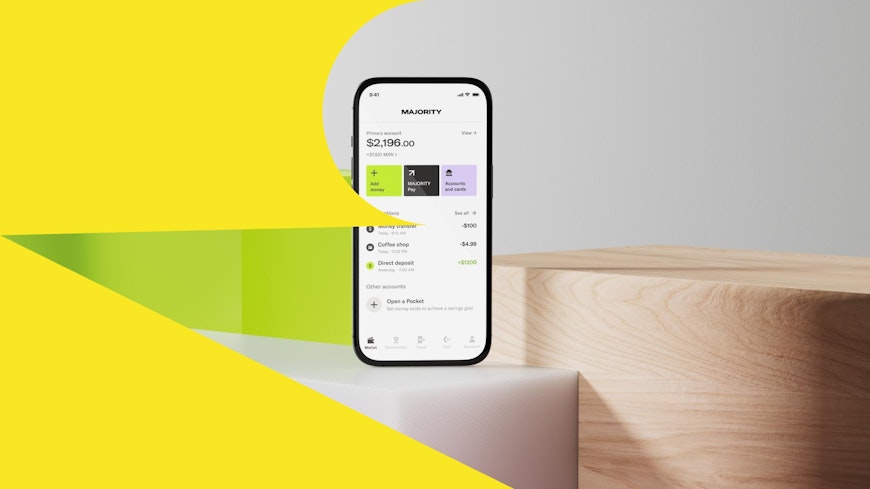
MAJORITY is a financial membership for migrants in the US, and India is a supported money-transfer destination. At the $6.99 per month member tier, there is no per-transfer fee on supported-country transfers regardless of delivery method, and the live exchange rate is visible in the app before each transfer is confirmed so you can compare against the mid-market USD-to-INR rate before sending.
To get started:
Frequently asked questions
What is the best way to send money to India in 2026?
The best way in 2026 is the option that delivers the largest amount of INR for the USD you send, at the speed your recipient needs, on a fee structure that stays predictable across future transfers. For most senders that means a bank deposit into an Indian bank account, on a provider that shows the live exchange rate before each transfer and does not rely on a promo rate.
What is the fastest way to send money to India?
The fastest method in 2026 is a bank deposit into an Indian bank account, because the Indian receive side settles domestically in seconds to minutes on UPI and IMPS. NEFT-based bank transfers can take a few hours instead, because NEFT settles in batches. What the sending provider adds on top of that is the part worth comparing.
What is the best app to send money to India?
The best app is the one that scores highest for you on the 5 criteria above (speed, INR delivered per USD, rate transparency, cost predictability, delivery-method reliability). Run the same USD amount through 2 or 3 provider apps at the same time of day and pick the highest INR total at the speed your recipient needs.
Does MAJORITY offer cash pickup or a mobile wallet on India?
No. Bank transfer into an Indian bank account is the delivery method on the India destination, and cash pickup has never been one. There is no mobile wallet delivery method either. A bank deposit is also the lowest-cost shape a 2026 transfer can take, because it is digital end-to-end with no cash-handling commission, and because the Indian receive side credits domestically over UPI or IMPS.
How long does a money transfer to India take in 2026?
Bank transfers to an Indian bank account typically take 30 minutes to 5 business days depending on the receiving institution and the delivery methods used (IMPS in minutes, NEFT in hours).
Does a monthly-membership provider charge a fee on each India transfer?
It depends on the provider, so check before signing up. With the MAJORITY membership, no per-transfer fee applies to India transfers at the member tier; the membership is $6.99 per month and includes transfers in supported countries. The exchange rate at the time of the transfer applies, and the rate plus estimated delivery time are visible in the app before each transfer is confirmed.
Disclosures
The MAJORITY app facilitates banking services through Axiom Bank, N.A. ("Axiom"), Member FDIC. The funds deposited in the account held at Axiom, Member FDIC, are FDIC-insured on a pass-through basis up to $250,000 per depositor in the event Axiom fails and subject to the satisfaction of certain conditions. Non-deposit products or services such as money transfers and telecom services are not FDIC-insured.
MAJORITY Visa® Debit Card is issued by Axiom Bank, N.A., Member FDIC, pursuant to a license from Visa U.S.A. Inc.